
The Masterstroke of 2026: Xiaomi CEO Lei Jun’s Hardcore YU7 Teardown Redefines the EV Rivalry
Published: January 2026 | Category: Automotive Technology
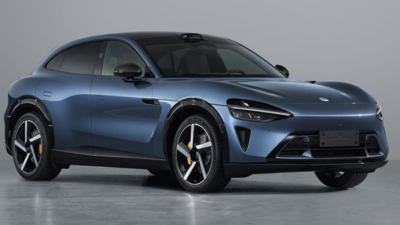
In a move that has sent shockwaves through the global automotive industry, Xiaomi Founder and CEO Lei Jun kicked off 2026 with a bold, unprecedented five-hour livestream. The centerpiece of this broadcast was not a glossy marketing presentation, but a "hardcore" surgical dismantling of the company’s newest flagship: the Xiaomi YU7 electric SUV.
Positioned as the definitive rival to the Tesla Model Y, the YU7 has been under intense public scrutiny since its mid-2025 launch. By inviting engineers to tear the vehicle down to its bare chassis on live camera, Lei Jun has signaled a new era of "transparency marketing," aiming to prove that Xiaomi’s engineering prowess isn't just skin deep.
1. The Strategy: Why a Live Teardown?
For decades, car manufacturers have guarded their assembly secrets behind closed factory doors. Lei Jun’s decision to dismantle a production-line Emerald Green YU7 in front of millions of viewers was a calculated response to viral skepticism and "misinformation" spreading on social media regarding the vehicle's structural integrity.
Addressing the "Green Belt" and Other Controversies
The livestream served as a direct rebuttal to several viral incidents that had plagued Xiaomi Auto in late 2025:
- The "Green Belt" Incident: Clarifying vehicle dynamics during unexpected maneuvers.
- Wheel Detachment Claims: Engineers demonstrated the structural integrity of the suspension and wheel hubs during high-impact scenarios.
- Marketing Scrutiny: Lei Jun addressed "small-font" disclaimers that had previously caused friction with consumer advocacy groups.
"We believe that strong products speak for themselves," Lei Jun remarked during the stream. "But when users have concerns, we must respond directly. We want everyone to see what is under the hood—literally."
2. Technical Deep Dive: The Anatomy of the YU7
The teardown revealed a vehicle that is as much a supercomputer as it is a car. The engineers meticulously removed components in a specific sequence: the four doors, the dual hoods (including the massive 3.11m² clamshell aluminum hood), the thermal management system, and finally, the electric drivetrain.
The Integrated Die-Cast Body
A highlight of the session was the display of the integrated die-cast body structure. This technology, pioneered by Tesla but refined by Xiaomi, reduces the number of parts and increases the torsional rigidity to an impressive 47,610 N·m/deg. This rigidity is a key factor in the YU7's "luxury-car" handling and safety ratings.
Power and Performance Metrics
The YU7 isn't just a larger version of the SU7 sedan; it is a performance beast in its own right:
- Drivetrain: Dual-motor setup delivering 691 hp (508 kW).
- Acceleration: 0 to 100 km/h in a staggering 3.23 seconds.
- Top Speed: 253 km/h, rivaling high-end performance SUVs.
3. Safety First: Beyond the Marketing Speak
One of the most intense segments of the livestream focused on the YU7’s door safety mechanisms. Public concern had grown regarding electronic door locks in the event of a total power failure during an accident.
Triple Redundancy and Mechanical Overrides
Xiaomi’s lead engineers demonstrated that the YU7 uses a triple-redundancy system:
- Main Battery Power: The standard operating mode.
- Auxiliary Battery: A backup for electronic systems.
- Dedicated Backup Source: A specialized capacitor/battery that allows the door locks to function even if the primary batteries fail during an extreme collision.
Crucially, the engineers highlighted the mechanical pull cables located on both the interior and exterior handles. Even in a complete blackout, the interior handles remain operable at all times.
4. Xiaomi YU7 vs. Tesla Model Y: The 2026 Comparison
The teardown was a clear competitive statement against the aging architecture of the Tesla Model Y. While Tesla has dominated the segment, Xiaomi is betting that superior materials and "HyperOS" integration will tip the scales.
| Feature | Xiaomi YU7 (Max) | Tesla Model Y (Performance) |
|---|---|---|
| Length | 4,999 mm | 4,751 mm |
| Wheelbase | 3,000 mm | 2,890 mm |
| Max Power | 691 hp | ~534 hp |
| Battery Type | 101.7 kWh NMC (CATL) | ~75-82 kWh |
| Max Range (CLTC) | 835 km | 615 km |
| Charging (800V) | 10-80% in 12-15 mins | 10-80% in 25-30 mins |
5. The "Human x Car x Home" Ecosystem
A significant portion of the five-hour stream was dedicated to the Smart Cabin. Lei Jun showcased how the Xiaomi HyperOS allows for a seamless transition between a user’s smartphone and the car’s 16.1-inch 3K central screen.
With over 1,000 Xiaomi smart home devices supported via the CarIoT ecosystem, the YU7 can trigger "Return Home" scenarios (turning on AC, lights, and rice cookers) as the car enters the home driveway. The teardown also revealed an unusually large cabin air filter, putting Xiaomi on par with Tesla’s "Bioweapon Defense Mode."



0 टिप्पणियाँ