
The Great Robotaxi War: London as the Global Frontier for US and Chinese Autonomous Supremacy
Exclusive Deep Dive | Published: January 4, 2026
The Dawn of the Autonomous Era in the United Kingdom
London is no longer just a historic capital of finance and culture; as of 2026, it has officially transitioned into the world's most significant testing site for the future of transportation. The narrow, rain-slicked streets that once belonged to horse-drawn carriages and iconic red double-decker buses are now the "frontline" of a high-stakes technological conflict. On one side stands Silicon Valley, represented by Alphabet’s Waymo; on the other, Beijing’s technological crown jewel, Baidu.
The catalyst for this sudden convergence was the UK government’s decisive move to fast-track commercial trials. Originally slated for late 2027, the Department for Transport (DfT) moved the start date for small-scale commercial pilots to Spring 2026. This shift has turned London into the first city on the planet where American and Chinese robotaxi services will operate in direct, head-to-head competition within the same regulatory framework.
Strategic Alliances: The "Trojan Horse" Strategy of Chinese Tech
While the US-China tech rivalry is often characterized by bans and trade restrictions—most notably the effective exclusion of Chinese AV firms from US soil—London offers a neutral zone. Baidu has executed a masterstroke in market entry by partnering with the West’s most dominant ride-hailing platforms: Uber and Lyft.
Uber’s Pivot to "Mapless" and Chinese Hardware
Uber, once a developer of its own self-driving tech, has pivoted to a "platform-first" model. In London, Uber is pursuing a multi-partner strategy. While it maintains a heavy investment in the UK-based startup Wayve (which uses "embodied AI" to navigate without high-definition maps), Uber’s most aggressive move for 2026 is its partnership with Baidu. Starting in the first half of the year, Londoners will be able to hail a Baidu Apollo Go RT6 directly through the Uber app.
Lyft’s European Debut
For Lyft, London represents its first major expansion outside of North America. CEO David Risher has confirmed that Lyft will deploy dozens of Baidu-powered vehicles into its "hybrid network," which allows for a seamless hand-off between human drivers and AI pilots. By integrating with the Freenow ecosystem (acquired by Lyft in 2025), the company plans to scale its London fleet to hundreds of vehicles by year-end.
Waymo’s Calculated Counter-Offensive
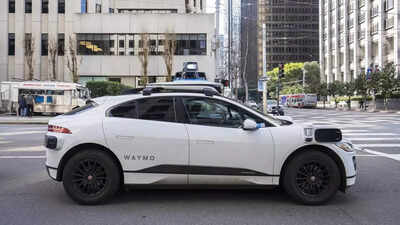
Waymo, the undisputed leader in the US market with over 20 million completed rides, is not yielding ground. In December 2025, Waymo began mapping the complex topography of central London using its 6th-generation "Waymo Driver" suite integrated into Jaguar I-PACE vehicles.
Waymo’s strategy differs from Baidu’s; it focuses on a "walled garden" approach, maintaining high control over the user experience through the Waymo One app. Waymo's pitch to Londoners is built on its unparalleled safety record in Phoenix and San Francisco, where its vehicles have proven to be significantly safer than the average human driver. However, the UK's Automated Vehicles Act 2024 presents new challenges, particularly the shift of legal liability from the "driver" to the "Authorized Self-Driving Entity" (ASDE).
The Legislative Backbone: UK’s Automated Vehicles Act 2024
The UK has positioned itself as a global leader in AV regulation by providing a level of legal clarity that neither the US nor the EU currently offers. The Automated Vehicles Act 2024 (AV Act) is the foundation of this industry.
- The Shift in Liability: Under the new law, if a robotaxi is involved in an accident while in "autonomous mode," the passenger (or "user-in-charge") is legally immune from prosecution for the vehicle's driving behavior. The responsibility lies entirely with the licensed operator.
- Marketing Restrictions: The Act makes it a criminal offense to use terms like "self-driving" or "autonomous" to describe vehicles that do not meet the strict safety threshold of being as safe as a "competent and careful" human driver.
- Safety Standards: Every vehicle must pass a rigorous "self-driving test" before receiving a permit. This is where the competition between US and Chinese hardware will be most visible, as sensors are tested against London’s notorious fog and heavy pedestrian traffic.
Economic Stakes: A £42 Billion Industry
The UK government estimates that the autonomous vehicle sector will contribute £42 billion to the economy by 2035 and create approximately 38,000 high-skilled jobs. The "Vision Zero" goal, which aims to eliminate all serious traffic injuries in London by 2041, is heavily dependent on the success of these robotaxi fleets.
Current market projections for the UK autonomous vehicle market show a Compound Annual Growth Rate (CAGR) of over 16% through 2035. While passenger cars are the current focus, the infrastructure being built today will likely support autonomous logistics and "last-mile" delivery vans by 2030.
National Security and the "Mobile AI Supercomputer"
The presence of Chinese-manufactured Apollo Go RT6 vehicles on British streets has raised red flags among security experts. Alex Ferrara of Bessemer Venture Partners has described these vehicles as "mobile AI supercomputers" capable of recording high-definition audio and video 24/7.
The concern is two-fold:
- Data Sovereignty: Where is the data stored? While Lyft and Uber claim all UK passenger data stays within European servers, the underlying AI models are trained on Chinese hardware.
- Kinetic Risks: In a worst-case scenario, critics argue that a fleet of autonomous vehicles could be remotely "bricked" or used to block critical infrastructure like the Blackwall Tunnel or the approaches to Westminster.
Technical Hurdle: The London Road Context
Technologically, London is the "final boss" for autonomous driving. Unlike the predictable grids of Chandler, Arizona, London features:
- Narrow Streets: Many roads are barely wide enough for two cars, requiring millimetric precision from the AI.
- Shared Spaces: Cyclists, electric scooters, and pedestrians often share the road in ways that confuse US-trained AI.
- Roundabouts: The complex multi-lane roundabouts of the UK require social negotiation and eye contact—skills that AI is still struggling to master.
Baidu’s RT6 model, which features a removable steering wheel and a "panoramic sky roof," is designed for the modern passenger, but its ability to navigate a rainy Friday night in Camden will be the ultimate test of its deep-learning capabilities.
Conclusion: A New Chapter in Urban Mobility
As we move through 2026, London will serve as the global barometer for the robotaxi industry. The battle between Waymo’s refined, proprietary systems and Baidu’s collaborative, platform-integrated approach will determine the future of urban mobility. If London succeeds, it will provide the blueprint for the rest of Europe. If it fails, the "autonomous dream" may be pushed back by another decade.
One thing is certain: the winner of the London "battleground" will likely hold the keys to the multi-trillion-dollar global market for self-driving services.



0 टिप्पणियाँ