
Aramco Facility Fire Near Riyadh: What We Know So Far
A large plume of smoke and fire was seen rising near an Aramco facility in Riyadh on Saturday, a witness told Reuters. There was no immediate confirmation from Saudi authorities and no claim of responsibility, amid escalating Houthi attacks on Saudi energy infrastructure.
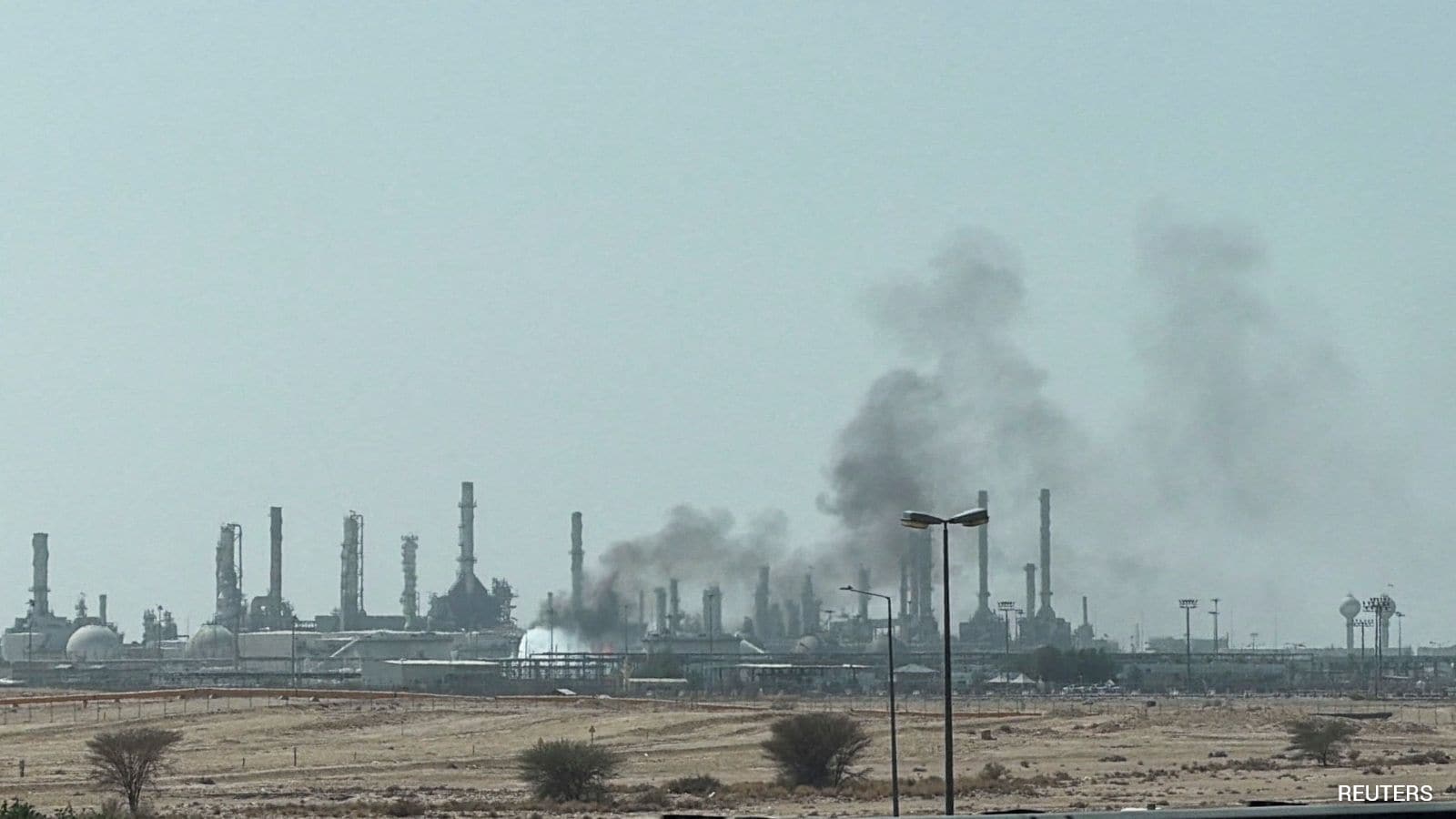
What Happened Near Riyadh
A large plume of smoke and fire was seen rising in the vicinity of an Aramco facility in Riyadh on Saturday, according to a witness who spoke to Reuters.
There was no immediate confirmation from Saudi authorities about the fire. Aramco did not immediately respond to a request for comment.
Footage circulating on social media showed what appeared to be a substantial blaze, though the exact location, cause, and extent of damage have not been independently verified.
No group had claimed responsibility for the incident as of the time of reporting. That absence of a claim is significant in itself — in previous rounds of the Saudi-Houthi conflict, the Houthis have typically claimed attacks on Saudi territory within hours.
Related: World News — continuing coverage of the Middle East.
Incident Timeline — How the Day Unfolded
The timeline below reflects what has been reported so far. Times are approximate and based on media reports.
🕐 Show Incident Timeline
- Saturday morning (local time): A witness in Riyadh reports a large plume of smoke and fire rising near an Aramco facility.
- Shortly after: The witness shares the observation with Reuters. Video footage begins circulating on social media, showing a substantial blaze.
- Within hours: Reuters publishes a report noting the fire, and stating that Aramco did not immediately respond to a request for comment.
- Through the day: No statement from Saudi authorities confirming or denying the incident. No claim of responsibility issued by the Houthis or any other group.
- Context: The incident follows a Houthi claim last week that it had attacked Saudi Aramco facilities in Yanbu with missiles and drones.
- Saudi response to the prior attack: Saudi Arabia said at the time that it had intercepted six ballistic missiles fired towards Taif and the Yanbu area, but reported no damage to Aramco facilities.
What Is Saudi Aramco?
Saudi Aramco — formally the Saudi Arabian Oil Group — is the state-owned petroleum and natural gas company of Saudi Arabia. It is one of the largest companies in the world by revenue and market value.
Aramco controls the vast majority of Saudi Arabia's oil reserves and production capacity. It operates the country's oilfields, refineries, and export terminals, making it the single most important corporate entity in global energy markets.
Aramco by the Numbers
Saudi Arabia holds roughly 17 per cent of proven global oil reserves. Aramco manages almost all of that. The company produces on the order of 9 to 10 million barrels per day, depending on OPEC+ quota decisions.
Its facilities are spread across the country, from the Ghawar field in the east to refineries and petrochemical complexes at Yanbu, Ras Tanura, and Jubail. Riyadh itself hosts Aramco's headquarters and additional facilities.
🛢️ Show Key Aramco Facts
- Ownership: State-owned by the Government of Saudi Arabia; a minority stake is listed on the Tadawul stock exchange following the 2019 IPO.
- Scale: Among the largest companies in the world by revenue and market capitalisation.
- Production: Roughly 9–10 million barrels of crude per day, subject to OPEC+ agreements.
- Key facilities: Ghawar field, Ras Tanura terminal, Yanbu refinery complex, Jubail industrial city, Riyadh facilities.
- Strategic role: Aramco is the world's largest single oil exporter and a swing producer whose output decisions directly shape global prices.
- Why it is targeted: Strikes on Aramco infrastructure are designed to inflict economic pain on Saudi Arabia and to move global oil prices.
Why Aramco Facilities Are Strategic Targets
Aramco's infrastructure is not just economically important — it is geopolitically decisive. An attack that disrupts even a fraction of Aramco's output can move global oil prices by several percentage points in hours.
That makes Aramco facilities a preferred target for state and non-state actors seeking maximum strategic impact from limited military capability.
Who Are the Houthis?
The Houthis — formally Ansar Allah — are a political and armed movement based in Yemen, drawn primarily from the country's Zaidi Shia community. They have controlled large parts of northern Yemen, including the capital Sanaa, since 2014.
The movement emerged in the 1990s as a religious revivalist and political organisation. It turned to armed insurgency in the 2000s during a series of conflicts with the Yemeni government.
The Saudi Intervention in Yemen
In March 2015, a Saudi-led coalition intervened militarily in Yemen to restore the internationally recognised government after the Houthis seized Sanaa. The war has been ongoing in various forms since.
The Houthis have repeatedly struck back at Saudi territory, using ballistic missiles, cruise missiles, and drones. Targets have included airports, oil facilities, desalination plants, and military sites.
🎯 Show Houthi Capabilities and Background
- Origins: Emerged in the 1990s in northern Yemen's Saada province as a Zaidi Shia revivalist movement.
- Territorial control: Controls Sanaa and much of northern Yemen since 2014.
- Alleged backers: Widely described as Iran-aligned. The Houthis and Iran deny direct operational control, though evidence of weapons transfers and technical support has been reported by UN investigators.
- Weapons: Ballistic missiles, cruise missiles, and one-way attack drones. Ranges have increased significantly since 2015.
- Reach: Houthi missiles and drones have struck targets deep inside Saudi Arabia, including Riyadh, Jeddah, and Abha, as well as targets in the Red Sea and Gulf of Aden.
- Saudi response: The Saudi-led coalition has conducted thousands of airstrikes in Yemen since 2015.
Houthi Attacks on Saudi Energy Infrastructure
Since 2015, the Houthis have repeatedly targeted Saudi oil and gas infrastructure. Attacks have struck pipelines, refineries, terminals, and loading facilities at various points.
🇸🇦 That is a massive fire at a Saudi Aramco refinery in Riyadh. The facility was reportedly targeted by Houthi drones or missiles this morning, and footage circulating online shows enormous flames. It's not yet confirmed whether a strike caused the fire. As if the Middle East needed another escalation right now. Writer: Lynn https://t.co/9MhayISFM4
— Mario Nawfal (@MarioNawfal) October 3, 2026
The most consequential single attack came in September 2019, when drones and cruise missiles struck the Abqaiq processing facility and the Khurais oil field. That attack briefly knocked out roughly half of Saudi Arabia's crude output.
The 2019 attack sent Brent crude prices up by nearly 15 per cent in a single day — the largest one-day jump in decades. It demonstrated just how vulnerable global oil supply chains are to precision strikes on a handful of key nodes.
The Yanbu Attack Last Week
The fire near Riyadh on Saturday is being reported in the context of a Houthi claim last week that it had attacked Saudi Aramco facilities in Yanbu with missiles and drones.
Yanbu is a major port city on Saudi Arabia's Red Sea coast. It hosts a large refinery and petrochemical complex, and is a key node for Saudi crude exports to Europe and North America.
What Saudi Arabia Said at the Time
Saudi Arabia said at the time that it had intercepted six ballistic missiles fired by the Houthis towards Taif and the Yanbu area. The Saudi statement did not report damage to Aramco facilities.
This is a recurring pattern in Saudi-Houthi exchanges: the Houthis claim a strike, Saudi Arabia acknowledges the launch but reports successful interception and no significant damage.
Independent verification of these claims is difficult. Neither side has an incentive to overstate the other's success — the Houthis want to demonstrate capability, and Saudi Arabia wants to demonstrate the effectiveness of its air defences.
History of Attacks on Saudi Energy Infrastructure
Saturday's incident is the latest in a long pattern. Saudi Arabia's oil and gas infrastructure has been attacked repeatedly over the past two decades by a range of actors.
📜 Show Attack History
- 2006: Al-Qaeda-linked militants attempt a suicide car bombing at the Abqaiq oil processing facility. The attack is foiled at the perimeter gate, but the facility's vulnerability is exposed.
- 2015 onwards: Houthi forces begin launching ballistic missiles and drones at Saudi territory after the Saudi-led intervention in Yemen. Targets include airports, oil facilities, and desalination plants.
- 2019 (May): Drone attacks damage two pumping stations on the East-West pipeline.
- 2019 (September): Drones and cruise missiles strike the Abqaiq processing facility and Khurais oil field. Roughly 5.7 million barrels per day of Saudi output is temporarily taken offline — about 5 per cent of global supply. Brent crude spikes nearly 15 per cent.
- 2020–2021: Continued Houthi missile and drone launches at Saudi Arabia. Riyadh, Jeddah, Abha, and border regions are frequently targeted.
- 2022 (March): A Houthi attack causes a temporary drop in output at a Saudi Aramco refinery in Jeddah. Fuel distribution facilities in Jazan and a gas plant are also targeted.
- 2023–2025: Relative reduction in Houthi attacks on Saudi territory amid ongoing but intermittent talks. Houthi activity shifts to the Red Sea, targeting shipping.
- Late 2026: Houthi attacks on Saudi energy infrastructure resume. Saudi Arabia reports intercepts over Taif and Yanbu. A fire is seen near an Aramco facility in Riyadh.
Why This Matters for Oil Markets
Saudi Arabia produces roughly one in every eight barrels of oil consumed worldwide. Aramco controls the majority of that output.
Any incident that raises questions about Aramco's ability to produce and export reliably is therefore a global macroeconomic event, not just a regional security issue.
How Markets React to Saudi Supply Risk
Oil markets price in two things when Saudi infrastructure is attacked: the immediate physical loss of supply, and the longer-term risk premium.
If a strike takes out meaningful production, the physical loss pushes prices up immediately. Even if production is restored quickly, the risk premium persists for weeks or months — traders factor in the possibility of further attacks.
📈 Show Oil Market Impact Indicators
- Saudi share of global supply: roughly 12 per cent of global crude production.
- Spare capacity: Saudi Arabia is one of the only producers with meaningful spare capacity. This is why its output is so important — it can act as a swing producer when other supplies are disrupted.
- Benchmark to watch: Brent crude, the international benchmark. The 2019 Abqaiq attack drove Brent up by nearly 15 per cent in a single session.
- Shipping costs: Insurance premiums for tankers in the Gulf and Red Sea rise after attacks. This indirectly raises delivered oil prices.
- Refined products: Diesel and jet fuel prices are particularly sensitive to refinery outages. Yanbu is a major refining hub.
- Strategic reserves: The US Strategic Petroleum Reserve and similar stockpiles in China, Japan, and India can be released to offset short-term supply shocks.
The 2019 Precedent
The September 2019 Abqaiq attack is the reference point for how markets process a serious strike on Saudi infrastructure.
The attack knocked out 5.7 million barrels per day of Saudi output — about 5 per cent of global supply — for several days. Brent crude closed up nearly 15 per cent on the first trading day after the attack.
Prices then receded as Saudi Arabia restored production faster than expected. The key lesson was that Saudi Arabia's ability to bring output back online quickly is itself a stabilising force for global markets.
Saudi Air Defences and the Intercept Record
Saudi Arabia has invested heavily in air defence systems over the past decade, largely in response to Houthi missile and drone attacks.
The kingdom operates a mix of American Patriot and THAAD systems, along with various shorter-range air defence assets. This layered architecture is designed to intercept threats at different altitudes and ranges.
🛡️ Show Saudi Air Defence Systems
- Patriot PAC-3: US-supplied system for intercepting ballistic missiles and aircraft at medium range.
- THAAD: Terminal High Altitude Area Defence — designed to intercept ballistic missiles in the terminal phase of flight.
- Shahine: A shorter-range system based on the Crotale design, for low-altitude threats.
- Counter-drone systems: Various electronic warfare and kinetic systems to counter small UAVs.
- Saudi claims: Saudi Arabia regularly reports intercepting Houthi missiles and drones over its territory, particularly over border regions and population centres.
- Scepticism: Analysts note that intercept claims are difficult to independently verify, and that Houthi drones — flying low and slow — are inherently hard to detect and intercept.
The Drone Problem
Small one-way attack drones are a particularly difficult problem for air defences. They fly low, have a small radar signature, and are cheap to produce.
Interceptors designed for ballistic missiles or aircraft are often far more expensive than the drones they are being used to shoot down. This cost asymmetry is a central challenge for defenders worldwide.
Regional and International Reactions
At the time of this report, there had been no formal statement from Saudi authorities confirming the incident, and no claim of responsibility.
The absence of an immediate Houthi claim is notable. In previous rounds, the group has been quick to take credit for high-profile strikes on Saudi territory.
🌍 Show What Each Party Has Said (or Not Said)
- Saudi Arabia: No immediate confirmation from Saudi authorities about the fire, per Reuters.
- Aramco: Did not immediately respond to a request for comment.
- Houthis: No claim of responsibility as of reporting time.
- Context of last week's Yanbu attack: The Houthis said last week they had attacked Saudi Aramco facilities in Yanbu with missiles and drones.
- Saudi response last week: Saudi Arabia said it intercepted six ballistic missiles fired by the Houthis towards Taif and the Yanbu area, and did not report damage to Aramco facilities.
What analysts will be watching is whether the Houthis issue a claim in the coming hours, and whether Saudi Arabia issues a formal statement on the cause of the fire.
Why This Matters — Analysis
1. The Return of Energy Infrastructure as a Target
For much of the past two years, Houthi attention has focused on Red Sea shipping rather than on Saudi territory. Attacks on Aramco facilities represent a return to an earlier phase of the conflict.
That shift matters because attacks on Saudi soil are a qualitatively different escalation from attacks on international shipping. They strike directly at the state that intervened militarily in Yemen in 2015.
2. The Verification Gap
We do not yet know what caused the fire, whether it was an attack, or what damage was inflicted. This is the central problem with reporting on incidents in Saudi Arabia.
Saudi Arabia tightly controls access to sensitive facilities and rarely provides detailed public accounts of strikes. Independent journalists cannot verify claims from either side.
The practical implication is that all accounts should be attributed as claims, and readers should treat early reports with appropriate caution.
3. Oil Markets and the Risk Premium
Even an unconfirmed incident can move oil markets if traders believe the risk of disruption is rising. This is the "risk premium" that persists after attacks even when physical supply is unaffected.
A sustained campaign against Aramco facilities would push that premium higher and keep it elevated. This would feed through into higher fuel prices globally, including in India.
4. The Wider Regional Picture
Houthi attacks on Saudi Arabia do not occur in isolation. They interact with the wider regional standoff involving Iran, Israel, and the United States.
Houthi action is often interpreted as a signal about Iranian intent — a way for Tehran to exert pressure indirectly without direct confrontation. Whether that reading is accurate in any individual case, it shapes how the region responds.
5. What a Sustained Campaign Would Mean
If Houthi attacks on Saudi energy infrastructure continue at a high tempo, several consequences follow: higher oil prices, higher insurance costs for Gulf shipping, increased pressure on the Saudi air defence budget, and potentially renewed pressure on the Houthis from Iran's rivals.
All of these would complicate an already fragile regional picture.
What to Watch Next
Four developments will determine how this story evolves over the coming days.
First, whether the Houthis issue a claim of responsibility. A credible claim, with details, would move this from an unconfirmed incident to a confirmed attack.
Second, whether Saudi Arabia confirms the incident and provides details. A formal Saudi statement on the cause and extent of damage would be the most authoritative source.
Third, how oil markets react at the next open. A muted reaction would suggest traders do not yet see this as a significant supply threat. A sharp move would signal the opposite.
Fourth, whether there is any sign of a wider pattern — additional attacks, strikes on other facilities, or a shift in Houthi targeting. A single incident can be a one-off; a series would signal a new phase.
Related: Defence coverage — military programmes, procurement, and strategy explained.
Key Takeaways
- A large plume of smoke and fire was seen near an Aramco facility in Riyadh on Saturday, according to a witness who spoke to Reuters.
- There was no immediate confirmation from Saudi authorities, and Aramco did not immediately respond to a request for comment.
- No group had claimed responsibility for the incident as of reporting time.
- The incident follows a Houthi claim last week that it had attacked Saudi Aramco facilities in Yanbu with missiles and drones.
- Saudi Arabia said at the time that it had intercepted six ballistic missiles fired towards Taif and the Yanbu area.
- The 2019 Abqaiq attack remains the reference point for how a serious strike on Saudi infrastructure can move global oil prices.
- Verification is limited: neither side has provided detailed public accounts, and independent access to sensitive Saudi facilities is restricted.
- All claims in this report should be attributed to the sources that made them.
Frequently Asked Questions
❓ What happened near Riyadh on Saturday?
A large plume of smoke and fire was seen rising in the vicinity of an Aramco facility in Riyadh, according to a witness who spoke to Reuters. There was no immediate confirmation from Saudi authorities about the fire, and Aramco did not immediately respond to a request for comment.
❓ Has anyone claimed responsibility for the fire?
No. As of the time of reporting, there had been no claim of responsibility for the fire near Riyadh. This is significant because in previous rounds of the conflict, the Houthis have typically claimed high-profile attacks on Saudi territory within hours.
❓ What is Saudi Aramco?
Saudi Aramco — formally the Saudi Arabian Oil Group — is the state-owned petroleum and natural gas company of Saudi Arabia. It is one of the largest companies in the world by revenue and market value, produces roughly 9–10 million barrels of crude per day, and manages the vast majority of Saudi Arabia's oil reserves.
❓ Who are the Houthis?
The Houthis — formally Ansar Allah — are a political and armed movement based in Yemen, drawn primarily from the country's Zaidi Shia community. They have controlled large parts of northern Yemen, including the capital Sanaa, since 2014. They are widely described as Iran-aligned, though they deny direct operational control by Iran.
❓ What happened in the Yanbu attack last week?
The Houthis said last week they had attacked Saudi Aramco facilities in Yanbu with missiles and drones. Saudi Arabia said at the time that it had intercepted six ballistic missiles fired by the Houthis towards Taif and the Yanbu area, but did not report damage to Aramco facilities.
❓ Where is Yanbu and why does it matter?
Yanbu is a major port city on Saudi Arabia's Red Sea coast. It hosts a large refinery and petrochemical complex and is a key node for Saudi crude exports to Europe and North America. Attacks on Yanbu facilities therefore carry significant implications for global oil markets.
❓ What was the 2019 Abqaiq attack?
In September 2019, drones and cruise missiles struck the Abqaiq processing facility and the Khurais oil field in Saudi Arabia. The attack briefly knocked out roughly 5.7 million barrels per day of Saudi output — about 5 per cent of global supply. Brent crude prices rose by nearly 15 per cent in a single day.
❓ Why does this matter for oil prices?
Saudi Arabia produces roughly one in every eight barrels of oil consumed worldwide, and Aramco controls the majority of that output. Any incident that raises questions about Aramco's ability to produce and export reliably can move global oil prices — first through the immediate physical loss of supply, and then through a persistent risk premium.
❓ What air defence systems does Saudi Arabia use?
Saudi Arabia operates a mix of American Patriot PAC-3 and THAAD systems, along with various shorter-range air defence assets and counter-drone systems. This layered architecture is designed to intercept threats at different altitudes and ranges. Small drones remain a particular challenge because they fly low and are hard to detect.
❓ How does Saudi Arabia respond to Houthi attacks?
Saudi Arabia has led a military coalition in Yemen since March 2015. Its air defences routinely intercept Houthi missiles and drones launched at Saudi territory, and it has conducted thousands of airstrikes in Yemen. Saudi statements typically acknowledge launches but report successful intercepts and no significant damage.
❓ Why is the Houthi conflict with Saudi Arabia ongoing?
The conflict stems from the 2014 Houthi takeover of Sanaa and the Saudi-led military intervention that followed in March 2015. The war has been ongoing in various forms since, with intermittent peace talks. Houthi attacks on Saudi territory are a way for the group to impose costs on the state that intervened in Yemen.
❓ Can the incident near Riyadh be independently verified?
Verification is extremely limited. Saudi Arabia tightly controls access to sensitive facilities and rarely provides detailed public accounts of strikes. Independent journalists cannot currently verify claims from either side. All accounts of the incident should therefore be attributed to the sources that made them, and treated with appropriate caution.
❓ What are the wider implications for the region?
A sustained campaign against Saudi energy infrastructure would push global oil prices higher, increase insurance costs for Gulf shipping, strain Saudi air defence budgets, and complicate an already fragile regional picture involving Iran, Israel, and the United States. Houthi action is often interpreted as an indirect signal of Iranian intent.
❓ What is Saudi Arabia's spare oil capacity, and why does it matter?
Saudi Arabia is one of the only oil producers with meaningful spare production capacity — the ability to increase output quickly when other supplies are disrupted. This is why its output is so important to global markets: it can act as a swing producer to stabilise prices during supply shocks elsewhere.
❓ What should I watch for next?
Four developments matter most: whether the Houthis claim responsibility; whether Saudi Arabia issues a formal statement; how oil markets react at the next open; and whether additional attacks follow, which would signal a shift to a sustained campaign rather than a one-off incident.



0 टिप्पणियाँ