
Palestine Mission to UN Highlights Jaishankar's Two-State Solution Remarks at UNGA
The Palestine Mission to the United Nations has highlighted External Affairs Minister S. Jaishankar's UNGA speech, in which he emphasised that a durable and lasting peace in the Middle East requires a Two-State solution.
By Current Affairs Viva Desk | Updated: September 27, 2026 | Reading Time: ~5 minutes
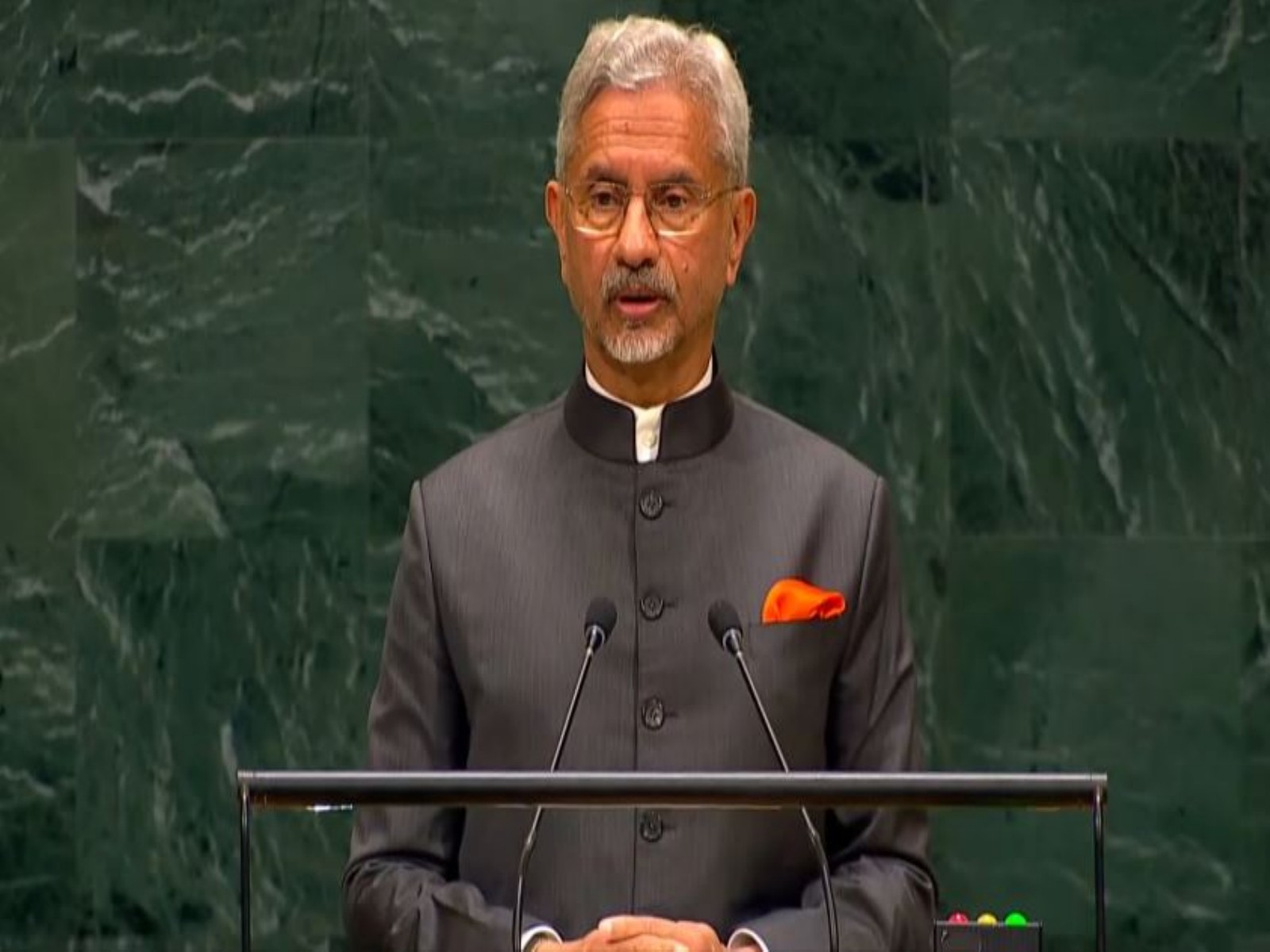
External Affairs Minister S. Jaishankar addressing the UNGA. (Photo: YouTube/UNGA)
Introduction
New York: The Palestine Mission to the United Nations has highlighted External Affairs Minister S. Jaishankar's speech at the UNGA, in which he emphasised the need for durable peace in the Middle East and said a durable and lasting peace requires a Two-State solution.
The Palestine Mission to the UN posted the video clip of the External Affairs Minister's remarks on its official X handle, signalling international recognition of India's consistent position on the Israeli-Palestinian issue.
Jaishankar's Key Remarks at the UNGA
Speaking at the United Nations General Assembly, Jaishankar outlined India's position on the ongoing conflict in West Asia:
"Tensions and violence also regrettably continue in West Asia or the Middle East. We strongly believe, that a durable and lasting peace, requires a Two State solution. In the meanwhile, India is contributing to humanitarian assistance, and relief efforts for the Palestinian people."
India's Long-Standing Position on Palestine
India has always supported a negotiated Two-State solution, towards establishment of a sovereign, independent and viable State of Palestine within secure and recognized borders, living side by side in peace with Israel.
Key elements of India's position on the Israeli-Palestinian issue include:
- Two-State Solution: India supports a sovereign, independent, and viable State of Palestine living side by side in peace with Israel within secure and recognised borders
- UN Membership: India also supports Palestine's membership of the United Nations
- Condemnation of Terror: India strongly condemned the terror attacks on Israel on October 7, 2023
- Concern for Civilians: India also voiced concern over the loss of civilian lives in the Israel-Hamas conflict
- Humanitarian Assistance: India extends humanitarian assistance to the people of Palestine both bilaterally and through the United Nations Relief and Works Agency (UNRWA)
The government conveyed this position to Parliament in August last year, reinforcing India's commitment to a peaceful resolution of the long-running conflict.
Jaishankar Expresses Concern Over Ukraine Conflict
In his remarks at the UNGA, Jaishankar also expressed concern over the conflict in Ukraine, now in its fifth year, and reiterated Prime Minister Narendra Modi's message on ending the war.
"As Prime Minister Narendra Modi stated, endless war must give way now, to an end to war. India supports ongoing initiatives to bring peace. Even as this is underway, there is an urgent need to address the security of seafarers, and supply of food grains and energy. India is prepared to do everything possible, to ameliorate this situation, especially with regard to food and energy security."
Peace Beyond the Absence of War
Jaishankar emphasised that peace must be understood in broader terms than simply the absence of war, urging the international community to strengthen stability, security, and predictability.
"Let us recognize that peace, is not just the absence of war. If the world is subjected to continuous threats and pressures, then we are really living on the edge of an abyss. All it takes is one more step to push us over. Therefore, it is imperative to strengthen stability, security and predictability. These are crucial elements, of the enabling environment for peace. If any of them are undermined, peace will inevitably be weakened. After eight decades of the UN, this should have become our second nature."
Why This Recognition Matters
The Palestine Mission's decision to highlight Jaishankar's remarks is significant for several reasons:
- Acknowledgement of India's Balanced Position: It signals that India's diplomatic stance on the Middle East is being recognised by all stakeholders, including the Palestinian side
- Strategic Autonomy: It underscores India's ability to maintain independent relationships with both Israel and Palestine
- Global Relevance: India continues to be seen as a credible voice in global peace efforts
- Humanitarian Leadership: India's consistent assistance to the Palestinian people through bilateral and UN channels is widely appreciated
- Consistency: India's long-standing position on the Two-State solution remains unchanged despite shifting global dynamics
India's Middle East Policy: A Delicate Balance
India's Middle East policy has historically balanced strong ties with Israel — its key defence and technology partner — with consistent support for Palestinian statehood. This dual-track approach has allowed India to serve as a potential bridge-builder in the region, even as broader geopolitical tensions escalate.
India's humanitarian contributions to Palestine, delivered through UNRWA and bilaterally, reflect its commitment to alleviating the suffering of civilians caught in the conflict. Additionally, India has repeatedly called for the release of hostages and the protection of non-combatants.
Conclusion
The Palestine Mission to the UN's highlighting of Jaishankar's remarks reinforces India's position as a responsible global actor committed to peace and stability in West Asia. By consistently advocating for a Two-State solution while providing humanitarian aid to the Palestinian people, India continues to play a constructive role in one of the world's most intractable conflicts.
As tensions persist in the Middle East, India's balanced and principled approach is likely to remain a critical element of any future diplomatic resolution.
(With inputs from ANI)
Frequently Asked Questions (FAQs)
Q1. What did Jaishankar say about the Two-State solution at the UNGA?
Jaishankar said tensions and violence regrettably continue in West Asia, and stressed that a durable and lasting peace requires a Two-State solution. He noted India is contributing to humanitarian assistance for the Palestinian people.
Q2. What is India's position on Palestine?
India has always supported a negotiated Two-State solution for the establishment of a sovereign, independent, and viable State of Palestine within secure and recognised borders, living side by side in peace with Israel.
Q3. Does India support Palestine's UN membership?
Yes, India supports Palestine's membership of the United Nations.
Q4. How does India help the Palestinian people?
India extends humanitarian assistance to the people of Palestine both bilaterally and through the United Nations Relief and Works Agency (UNRWA).
Q5. Why did the Palestine Mission highlight Jaishankar's remarks?
The Palestine Mission to the UN highlighted Jaishankar's speech on its X handle, recognising India's consistent, balanced position on the Israeli-Palestinian conflict and India's support for Palestinian statehood.
Q6. What did Jaishankar say about the Ukraine war?
Jaishankar said endless war must give way to an end to war, reiterated PM Modi's message, and stressed the urgent need to address the security of seafarers and the supply of food grains and energy.
World News, India, Palestine, Middle East, S Jaishankar, UNGA, Two-State Solution, Indian Foreign Policy, International Relations, Current Affairs



0 टिप्पणियाँ