
The Battle for the Ballot: Inside Bengal's 'Special Intensive Revision' Storm
A Deep Dive into Mamata Banerjee’s Ultimatum to the CEC, the Human Cost of SIR, and the Political Firestorm Shaking West Bengal.
The Midnight Ultimatum
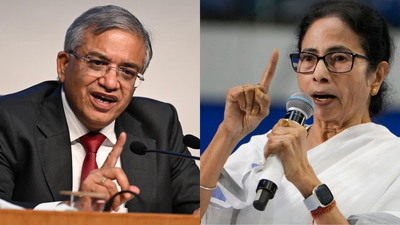
In the high-stakes theater of Indian politics, West Bengal has always been the lead actor. But as 2026 approaches, the drama has moved from the rally grounds to the very ink on the voter lists. Chief Minister Mamata Banerjee has fired a fresh salvo at the Election Commission (EC), writing a blistering letter to Chief Election Commissioner (CEC) Gyanesh Kumar. Her message? "Rectify the glitches, or stop the SIR."
The Special Intensive Revision (SIR) was supposed to be a routine cleanup. Instead, it has become a "dangerous" exercise that the CM claims is riddled with "procedural violations" and "administrative lapses." But behind the legalese of "unplanned, arbitrary, and ad-hoc" maneuvers lies a darker, more human story of overworked officials and terrified communities.
The Human Toll: When Democracy Becomes 'Deadly'
Perhaps the most "chatapata" yet heartbreaking aspect of this saga is the plight of the Booth Level Officers (BLOs). These are the unsung foot soldiers of democracy—mostly schoolteachers and Anganwadi workers. Mamata Banerjee has highlighted that the workload is "far beyond human limits."
The Tragedy of Rinku Tarafdar
In Krishnanagar, the death of 51-year-old schoolteacher Rinku Tarafdar sent shockwaves through the state. Tasked with verifying thousands of names against the 2002 voter list—a gap of over two decades—she reportedly left a suicide note stating she simply couldn't handle the pressure. She isn't alone. Reports suggest nearly 28 to 33 BLO deaths nationwide linked to the stress of SIR, with several cases occurring right here in Bengal.
"A process that normally takes three years is being compressed into one month. It's not just a revision; it's a marathon with no finish line," says a local BLO from Jalpaiguri, wishing to remain anonymous.
The Matua Factor: A Political Tinderbox
If the BLO deaths are the tragedy, the Matua community controversy is the political firecracker. The SIR requires voters to link their current status to the 2002 electoral rolls. For the Matuas—a refugee community that migrated from Bangladesh—this "legacy data" is a nightmare to produce.
In districts like North 24 Parganas and Nadia, the numbers are staggering. Studies by the Sabar Institute show that in Matua-dominated seats like Krishnaganj and Bangaon Dakshin, deletion rates are hitting upwards of 30-40%. The BJP's Shantanu Thakur caused a stir by suggesting the community should "endure the sacrifice" of losing 1 lakh names to weed out "infiltrators." The TMC, predictably, has branded this a "vote-cleansing operation" designed to disenfranchise genuine citizens.
| Constituency | Reason for Deletion | Percentage (%) |
|---|---|---|
| Krishnaganj | Untraceable/Absent | 42.11% |
| Bangaon Dakshin | Permanently Shifted | 41.76% |
| Swarupnagar | Permanently Shifted | 38.46% |
WhatsApp Governance? The Glitch in the Machine
Mamata's letter doesn't stop at empathy; it attacks the technical infrastructure. She alleges that the EC is issuing orders via WhatsApp rather than formal circulars. Combine this with frequent server failures on the BLO app and data mismatches, and you have a recipe for chaos.
The CM warns that if these glitches aren't fixed, the final list will be a "direct assault on democratic governance." Meanwhile, the EC has pushed back, ordering the state to release pending honorariums for BLOs and warning against any "intimidation" of election staff by the ruling party.
The 2026 Horizon
Why does this matter so much? Because the 2026 West Bengal Assembly Elections are the ultimate prize. Every name deleted or added could be the difference between a victory march and a concession speech. With the "Claims and Objections" window open until January 15, 2026, and the final roll due on February 14, the next few weeks will be a frenzy of legal battles and grassroots protests.
Is this a genuine attempt to clean the rolls, or a "political mechanism" as Abhishek Banerjee claims? As the Supreme Court begins to take notice of BLO safety, one thing is certain: the road to the 2026 ballot box is currently under construction, and the foundation is looking very shaky.



0 टिप्पणियाँ